
WELCOME BONUS 300%
UP TO €2000 + 100
FREE SPINS
UP TO €2000 + 100
FREE SPINS
Home → Games
Casino games at Royal Online
Four Blackjack Hand Decisions at a Glance
Blackjack with 6 decks offers a Return to Player (RTP) of 99.54%, featuring a house edge of 0.46% when played with basic strategy, assuming dealer stands on Soft 17 and allows doubling down on any two cards, including after splitting. This favourable RTP is achieved through optimal play, making it a preferred choice for strategic players seeking to minimise the house's advantage.
The RTP for a single-deck Blackjack game under classic rules, paying 3:2 for a Blackjack, stands at a high 99.85%, with a corresponding house edge of only 0.15%. This lower edge, compared to the 6-deck variant's 0.46%, is largely due to the reduced number of decks, offering a potentially more favourable environment for players who understand the game's nuances.
A notable difference arises with Blackjack variations offering a 6:5 payout for a Blackjack instead of the standard 3:2. This change increases the house edge significantly to 1.85%, a jump of 1.39 percentage points. For a wager of €10, this means a Blackjack payout of €12 instead of €15, directly impacting the player's potential returns.
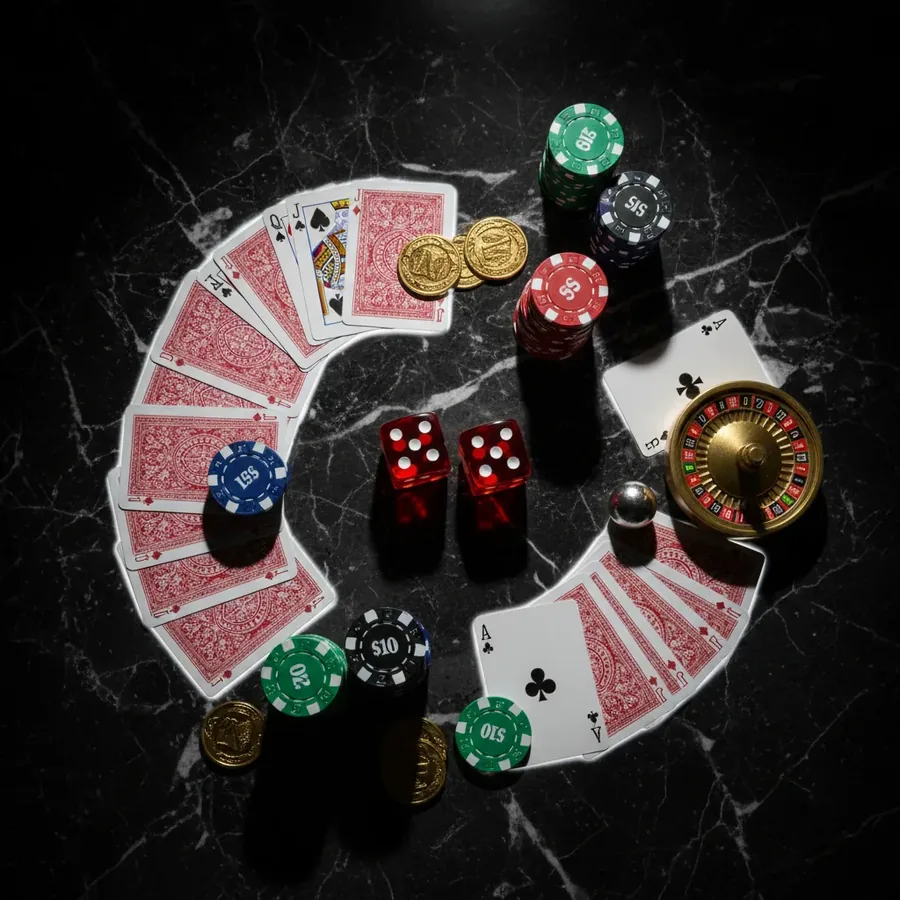
Before sitting down: check table bet limits
For high rollers, understanding table bet limits is paramount for strategic gameplay. European Roulette, with a house edge of 2.70%, offers a wide array of betting options, from a Straight bet paying 35:1 to even-money bets like Red/Black paying 1:1. The available limits on these tables will dictate the scale of wagers possible.
Baccarat presents a compelling option with its Banker bet boasting an RTP of 98.94% and a house edge of 1.06%, making it one of the best bets available. The commission of 5% on wins is factored into the effective payout of 0.95:1. High stakes players can leverage these favourable odds within the table's maximum bet limitations.
American Roulette, particularly the Five Number Bet covering 5 of 38 sectors, carries a substantial house edge of 7.89% and an RTP of 92.11%. This bet is significantly less favourable than European Roulette options. High rollers should be aware of the specific bet limits for this wager, as they can influence the overall risk profile.
RNG Roulette vs. Live Table: Four Clear Differences
Random Number Generator (RNG) European Roulette offers a consistent RTP of 97.30% with a house edge of 2.70% across all bets, including even-money bets like Red/Black paying 1:1. The mathematical advantage remains constant regardless of bet type, providing a predictable gaming environment for players.
Live dealer roulette tables, while offering a different atmosphere, typically adhere to the same mathematical principles as their RNG counterparts. For instance, French Roulette, without the La Partage rule for inner bets, also has an RTP of 97.30% and a 2.70% house edge on its various internal wagers.
The American Roulette variant, featuring both 0 and 00, significantly alters the odds. The Five Number Bet, for example, has an RTP of 92.11% and a house edge of 7.89%. This contrasts sharply with the European version, where the single zero (0) results in a lower overall house advantage for players.
Before Double Down: read the open dealer card
In Blackjack, when playing with 6 decks and a 3:2 payout for a Blackjack, the house edge is 0.46% when using basic strategy. Players should always assess the dealer's upcard before deciding to double down, as this decision is heavily influenced by the potential for the dealer to achieve a strong hand.
The decision to double down in Blackjack is a critical strategic element, particularly in games with a low house edge such as single-deck Blackjack with a 3:2 payout, which offers an RTP of 99.85% and a house edge of 0.15%. Observing the dealer's open card is paramount for making an informed choice.
Consider a scenario where a player holds a 10 and the dealer shows a 6. Doubling down here is often advisable. However, if the dealer's open card is an Ace, the risk associated with doubling down increases substantially, particularly in multi-deck games where card removal effects are less pronounced.
What Doesn't Count Towards Bonus Wagering on Table Games?
The welcome bonus at Royal Online offers 300% up to €2,000 plus 100 free spins. However, table games contribute only 10% towards the wagering requirements. For high rollers, this means that a €1,000 bet on a table game only counts as €100 towards fulfilling the bonus turnover conditions.
To illustrate, if the wagering requirement for the €2,000 bonus is 40 times the bonus amount, a player would need to wager €80,000. If they exclusively played table games, their €1,000 bet would reduce this requirement by only €100. This significantly extends the time and amount needed to clear the bonus.
Bets on certain high-RTP table games, like Baccarat Banker with a 98.94% RTP, or even European Roulette with a 97.30% RTP, will contribute to the bonus wagering, but at the reduced rate of 10%. This means players engaging with these mathematically favourable games still face a considerable turnover obligation.
Game categories at a glance
| Category | Examples | Stakes From | Highlight |
|---|---|---|---|
| Slots | Big Bamboo, Sun of Egypt 3, The Dog House | 0,10 EUR | thousands of titles |
| Table games | Roulette, Blackjack, Baccarat | 0,50 EUR | classic rules |
| Live casino | Quantum Blackjack Plus Live, Blackjack Party | 0,20 EUR | real dealers |
| Jackpot games | Mega Moolah, Divine Fortune, Age of the Gods | 0,20 EUR | progressive pools |
| Instant games | Aviator, Plinko, Mines | 0,10 EUR | fast rounds |
| Video poker | Jacks or Better, Deuces Wild | 0,25 EUR | strategy based |
Connection Lost in Table Game: Round Continues Automatically
In the event of a disconnection during a game of Blackjack with 6 Decks, the round will continue automatically. This ensures that bets placed, such as a standard €100 wager, are still processed according to the game's rules. The automated continuation prevents any loss of player funds due to technical interruptions.
The house edge for Blackjack 6 Decks, employing basic strategy, stands at 0.46%, with an RTP of 99.54%. This low house edge means that for every €100 wagered, a player can theoretically expect to retain €99.54 over an extended period. Such figures are crucial for high rollers managing their bankroll over many hands.
For players engaging with higher stakes, automatic continuation in case of disconnection is a vital feature. It safeguards potentially large bets, such as a €1,000 stake in Blackjack, from being lost due to external factors. This automated process provides a layer of security for substantial wagers.
Game Shows: sectors, multipliers, and bet ranges
These multipliers can significantly amplify a player's initial bet, turning a small wager into a substantial payout. For example, a €10 bet could become €100 or more if it lands on a high multiplier sector.
The bet ranges for games that incorporate multipliers and sectors are typically designed to accommodate a wide spectrum of players, including high rollers. While a standard bet might start at €0.10, high rollers can often place bets up to €1,000 or more per round. This allows for substantial exposure to the potential multipliers offered.
The theoretical RTP for most table games, such as European Roulette at 97.30% with a 2.70% house edge, offers a baseline for understanding game fairness. Game shows, however, can exhibit a wider variance in RTP depending on the complexity of their bonus features and multiplier structures. Players should always check the specific game's RTP if available.
House Edge and RTP: Two Names for the Same Number
The house edge and Return to Player (RTP) are two sides of the same coin, representing the casino's advantage and the player's theoretical return, respectively. For instance, Blackjack with 6 Decks has a house edge of 0.46%, corresponding to an RTP of 99.54%. This means for every €100 wagered, the casino expects to keep €0.46, while the player gets back €99.54 over time.
Video Poker Jacks or Better (Full Pay) offers an RTP of 99.54% with a house edge of 0.46% when played with optimal strategy. This high RTP is particularly attractive to players who understand and apply correct strategy, maximizing their potential returns. For high rollers, this translates to a very low cost of play over an extended period.
Games with lower RTPs, such as American Roulette's Five Number Bet at 92.11% RTP and a 7.89% house edge, present a significantly higher cost to the player. A high roller betting €1,000 on this bet would theoretically lose €78.90 per €1,000 wagered, highlighting the importance of choosing games with favorable RTPs.
Plein Pays 35:1, Cheval Pays 17:1
In European Roulette, a 'Plein' or straight-up bet on a single number pays 35 to 1. This means a €100 wager on a specific number, if successful, yields a total return of €3,500 plus the original stake. The RTP for European Roulette remains 97.30%, with a house edge of 2.70% across all its betting types.
A 'Cheval' or split bet, covering two adjacent numbers, pays 17 to 1. A €100 split bet would return €1,700 plus the initial €100 stake. While this offers a lower payout than a straight-up bet, it doubles the player's chances of winning on each spin. The underlying mathematics of the European wheel remain consistent.
For high rollers, the choice between a 'Plein' and a 'Cheval' bet in European Roulette, or indeed any roulette variant, influences both potential win size and probability. A €10,000 straight-up bet could win €350,000, whereas a €10,000 split bet would win €170,000, illustrating the trade-off between risk and reward.
Double Down: double bet, only one card
In Blackjack with 6 Decks, the 'Double Down' option allows a player to double their initial bet, typically on their first two cards, in exchange for receiving only one additional card. This strategic move is often employed when the player's hand total is strong, and the dealer's upcard appears weak. The RTP for this game variant is 99.54%, with a house edge of 0.46% when basic strategy is applied.
When a player chooses to double down, their wager is effectively doubled, meaning a €500 bet becomes €1,000 for that hand. This is a popular tactic for high rollers looking to maximize profits in advantageous situations. For example, a €1,000 double down bet that results in a win would pay €1,000 (1:1 payout), returning a total of €2,000.
The rules for doubling down in Blackjack 6 Decks permit doubling after a split, an allowance that can further enhance strategic play for skilled players. This flexibility, combined with the game's favourable RTP and low house edge, makes it an attractive option for those wagering significant amounts, provided they adhere to optimal play.
Double Down: Doubling Your Bet After Two Cards
The option to double down, a key feature for high rollers, allows players to double their initial bet after receiving their first two cards. This strategic move is typically employed when the player's hand has a strong probability of winning against the dealer's upcard. For instance, in Blackjack with 6 decks, doubling down can be a significant part of a high-stakes strategy when adhering to optimal play.
While the standard Blackjack game with 6 decks offers a Return to Player (RTP) of 98.15%, the decision to double down is intrinsically linked to the player's hand composition and the dealer's visible card. A skilled player might double down on a hard 11 against any dealer upcard, or a hard 10 against a dealer's 2 through 6. This tactical doubling aims to capitalize on favourable situations for potentially larger wins.
For a player betting €100 on a favourable double down opportunity, the potential payout increases to €200 if the subsequent card results in a winning hand. This contrasts with a standard win where a €100 bet would yield a €100 profit. The effective house edge can be influenced by the strategic application of the double down option in conjunction with other optimal play decisions.
Straight, Split, and Corner in direct comparison
In European Roulette, a Straight bet on a single number, such as placing €100 on number 17, pays 35:1. This means a successful bet returns €3,500 in winnings, in addition to the original €100 stake. The game features 37 sectors, including a single zero, contributing to a house edge of 2.70% across all bets.
A Split bet, covering two adjacent numbers, offers a payout of 17:1. If a €100 Split bet on numbers 17 and 18 wins, the player receives €1,700 in winnings plus the stake. A Corner bet, covering four numbers, pays 8:1. A €100 Corner bet winning would result in €800 in winnings plus the initial €100.
These betting options are part of the European Roulette structure which has 37 sectors. The house edge remains consistent at 2.70% for all these bet types, irrespective of the number of outcomes covered. This consistency is a key factor for high rollers managing their risk across different betting patterns within the same game.
Video Poker 9/6: What the Two Numbers Mean
Video Poker 9/6, also known as Full Pay Jacks or Better, refers to the payout ratios for a Full House and a Flush, respectively. With optimal strategy and a maximum bet of 5 coins, a Full House pays 9 coins for every 1 coin wagered, and a Flush pays 6 coins for every 1 coin wagered. This specific paytable is crucial for achieving the highest Return to Player (RTP).
The 9/6 paytable contributes to an RTP of 99.54% when played with optimal strategy. For high rollers, this means that over an extended period, theoretically, €99.54 out of every €100 wagered could be returned. This is significantly higher than many other casino games and offers a more favourable mathematical edge, especially when betting the maximum number of coins for the Royal Flush bonus.
A maximum bet of 5 coins is required to unlock the full Royal Flush bonus of 4,000 coins for a 5-coin bet, rather than the standard 800 coins for a 1-coin bet. For a player betting the maximum of 5 coins per hand, the potential return on a Royal Flush is substantial, making this a favoured variant for strategic players aiming for significant returns.
37 vs. 38 Sectors: What the Double Zero Costs
The presence of a double zero on an American Roulette wheel, making it 38 sectors in total, significantly impacts the house edge compared to a European Roulette wheel with 37 sectors. This additional '00' pocket increases the casino's advantage, particularly on certain bets. The house edge on European Roulette is 2.70%, while on American Roulette it rises to 5.26% for most bets.
The 'Five Number Bet' on American Roulette, covering 0, 00, 1, 2, and 3, is an example of a bet with an exceptionally high house edge of 7.89%. This is the highest edge found on any single bet at an American wheel. In contrast, European Roulette's highest edge on any single number bet (Straight) is its consistent 2.70%.
For a high roller, the difference between 37 and 38 sectors is not negligible. Betting €100 on a Straight bet on European Roulette has a house edge of €2.70 per spin. The same €100 bet on an American Roulette wheel, excluding the Five Number Bet, carries a house edge of €5.26 per spin. This difference can accumulate substantially over prolonged play.
Read Statistics of Last 500 Rounds Correctly
When observing the statistics of the last 500 rounds in a game like Baccarat, high rollers look for patterns that might indicate trends, though it is crucial to understand that each round is an independent event. For example, if the Banker bet has won 60% of the time over the last 500 rounds, this is a statistical observation rather than a predictor of future outcomes.
In Baccarat, the Banker bet has a Return to Player (RTP) of 98.94% with a 1.06% house edge, assuming an 8-deck game with a 5% commission on wins. The Player bet has an RTP of 98.76% and a 1.24% house edge. While the Banker bet is mathematically superior due to the commission, observing frequent Banker wins in the last 500 rounds does not alter the underlying probabilities.
Similarly, in Craps, the Pass Line bet has an RTP of 98.59% with a 1.41% house edge. If the last 500 rolls show a disproportionate number of Pass Line wins, it is essential to remember that the statistical probability of rolling a 7 or 11 on the come-out roll remains constant. Past results do not influence future independent events in RNG-based casino games.
Contact
Live - online chat
Banking









Providers












Royal Online Casino 2026